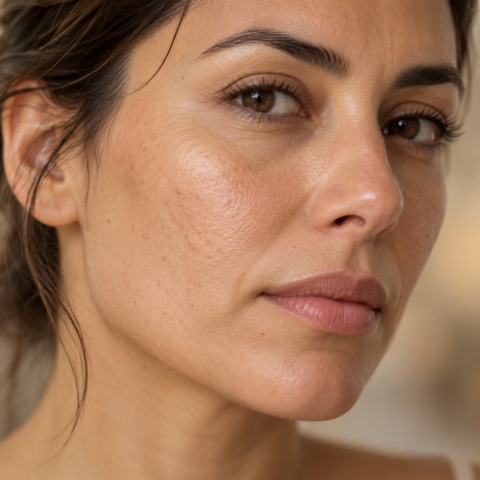

Planning facials from Belton
From Belton, plan your facial appointment around a drive of 25 to 40 minutes to Lee's Summit, using Route 58, I-49, and Missouri 291 as useful route references while allowing for your starting neighborhood, roadwork, and heavier commuting traffic. For your visit from Belton, use 286 Southwest Blue Parkway, Lee's Summit, as the destination and call 816-301-4226 to confirm the appointment details. Living in Cass County does not mean you need to schedule every facial step on one day; explain your commitments back in Belton so that recovery expectations can be considered before you agree to an optional addition.
What makes a facial truly customized for Belton
Custom medical-grade facials begin by examining the skin you have today, with attention to medications, previous procedures, and any tendency toward inflammation that could make a familiar treatment unsuitable at this particular visit. The word medical-grade does not promise a specific result; ask which products will touch your skin, what discomfort might occur, and how the provider would adjust the visit if redness develops. Think of the appointment as one part of ongoing skin care, but the session cannot permanently remove pores, erase established scars, or guarantee a lasting change in pigmentation after a single treatment.
HydroGlow, hydrofacials, and the Hydrafacial question
HydroGlow facials offer a water-based treatment conversation, rather than assuming that every hydrating facial uses the same equipment, the same solutions, or the same intensity of surface treatment. Hydrafacial is a branded treatment name, not a universal description; ask the team to explain its HydroGlow approach instead of inferring a particular machine or proprietary system from a similar-sounding treatment name. Hydration-focused care may temporarily improve how dry skin feels, although the immediate appearance should not be confused with proof that acne, melasma, or deeper structural changes have been permanently corrected.
Extractions without an aggressive approach
Extractions in facials are intended for selected clogged pores, with the understanding that not every visible bump is a removable plug and that the surrounding skin needs protection from unnecessary trauma. More pressure is not evidence of a more thorough facial; temporary redness or tenderness can occur, and your provider should explain which changes are expected and when symptoms deserve a call to the office. Congestion can return because pores continue functioning normally, and recurring acne deserves its own assessment instead of an assumption that a more frequent facial will address every underlying cause.
Deciding whether to add dermaplaning for Belton
Dermaplaning can be considered as an add-on to facials, but the decision should account for active lesions, fragile areas, recent resurfacing, and whether another exfoliating step is already planned. Dermaplaning is not a permanent hair-reduction procedure, so coarse or hormonally changing facial hair may call for a separate discussion instead of repeated surface exfoliation alone. Layering dermaplaning with acids requires particular care, and the safest recommendation may be to omit an optional step rather than trying to fit several forms of resurfacing into one appointment.
Matching care to oily, dry, combination, and sensitive skin
Oily skin can still be dehydrated, and an assessment should distinguish excess oil from the uncomfortable tightness that can follow harsh cleansing or an overly complicated product routine. For dry or mature skin, comfort and barrier support may take priority, with any optional step judged against the possibility that irritation could last longer than the temporary surface benefit you hoped to achieve. Skin tone also matters when planning exfoliation, alongside information about eczema, rosacea, allergies, and previous reactions that might not be obvious from the appearance of your skin that day.
How often should facials fit your routine?
A four-to-six-week interval is a common discussion point for facials, with longer gaps sometimes making more sense when skin feels stable or when recent irritation needs time to settle before another exfoliating treatment. Your next appointment should reflect the response to this one, because repeating the same steps more often is not necessarily an appropriate answer when the first session was uncomfortable or disappointing. Event planning deserves a separate timing discussion, and leave enough flexibility for your provider to recommend an earlier visit or a less intensive option based on your treatment history.
Preparation and home care that protect your skin for Belton
Bring a complete product and medication list to your facial consultation, along with any cold sore history, allergies, pregnancy or nursing status, and recent sunburn that could change the recommended products or timing. Aftercare commonly emphasizes gentle cleansing and appropriate moisturizer, with clear guidance about sunscreen, outdoor exposure, exercise, and anything else that could make freshly treated skin uncomfortable. Mild short-lived redness may occur, but worsening symptoms need attention, and ask whom to contact after the visit if you develop unusual pain, spreading redness, or a reaction that does not follow the guidance you received.